.png)
10 signatures reached
To: Arizona State Parks, United States Forest Service (Tonto, Apache-Sitgreaves and Coconino)
No Arizona Alpine Trail
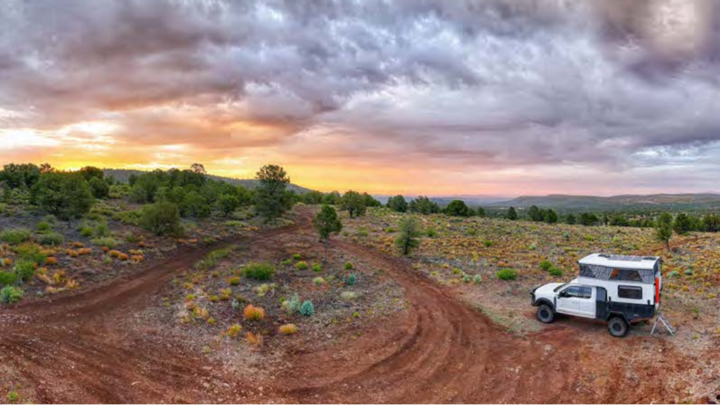
After reviewing the Arizona Alpine Trail master plan, the signatories below have serious concerns. The undersigned include community members who live adjacent to the trail, quiet users who travel for many hours to recreate without noise and disturbance, people with conservation and wildlife science backgrounds, non-profit partners, tribal members, and more. This non-comprehensive list of issues lends itself to three major demands, which are nested within agencies that steward public monies:
- That the United States Forest Service, specifically the Tonto, Apache-Sitgreaves and Coconino, do not sign an MOU with the Arizona Alpine Trail, or any agreement that endorses this project;
- That Arizona State Parks and Trails does not award additional funding for the build out or promotion of the Arizona Alpine Trail; and
- That the Office of Outdoor Recreation and Office of Tourism do not promote or advertise the Arizona Alpine Trail
Why is this important?
The following non-comprehensive list details a lack of care and concern at myriad levels. In numerous instances, basic due diligence with regard to the intersection of existing and impending federal policies as it relates to our National Forests were never considered. This is alarming, since the Arizona Alpine Trail utilizes this aspect of the public trust in order to fulfill its goals of becoming one of the most impactful cross-country ATV trails in the United States.
- Locals are concerned with increased dust, noise, and traffic in their communities. With no plan in place to mitigate these factors, there is the potential for added contaminants in the water sources (due to oiling unsealed roads in the event of large quantities of dust), noise pollution in small towns, and congestion on roads designed for full sized vehicles.
- National Forests act as critical watersheds - the White Mountains alone provide some 40% of the water for the City of Phoenix. With the potential for added ignition, damage to riparian areas, and increased dust, the damage to pristine rivers, streams, and waters that have the potential to become Outstanding Arizona Waters or designated as Wild and Scenic has not been sufficiently considered.
- The master plan acknowledges that there is no formal strategy or known metrics on how users will be reached or educated on the proper etiquette of trail usage or where the trail actually is.
- Users of the AZAT and the ATV entourage in the White Mountains often boast online of ‘mudding’ in the Apache-Sitgreaves National Forest in particular, creating vast deposits of erosion and encouraging additional wildcat trail creation. As the USFS is well aware, in the Alpine ranger district, unauthorized races were occurring until the agency was forced to shut them down. Thus, without a plan to curtail abuse, the potential for abuse has already been demonstrated.
- The master plan outlines that the bulk of education and outreach will consist of the AZAT volunteers directing people to the agencies. Arizona State Parks has indicated numerous times they do not oversee the trail, and the USFS is chronically understaffed and underfunded.
- There is no mention in the AZAT master plan that it is illegal to kill endangered species, or that it is illegal to harass wildlife. Considering that the AZAT is habitat and overlaps with several Threatened and Endangered species at both the state and federal levels, this is neglectful.
- AZAT administrators of social media outlets (notably on Facebook) have blocked or removed dissenting commenters on posts. This displays an unwillingness to listen to the public and meaningfully address concerns, and an ongoing commitment to control the narrative.
- The vast majority of AZAT is on Maintenance Level 2 roads in the USFS, which have a significant deferred backlog of routine maintenance that creates unsafe and harmful conditions. The AZAT master plan has no plan to maintain the roads of the AZAT, which creates prime conditions for potentially irreparable damage, habitat fragmentation, ecological destruction, increased fire, trash, and so on.
- Critically, no Motor Vehicle Use Map (MVUM) has been issued by the United States Forest Service on the Apache-Sitgreaves, where the majority of the AZAT sits. As previously mentioned, the USFS is chronically understaffed and underfunded, with no anticipated release date of an MVUM. This means that users on the National Forests have no idea where it is legal to travel with motorized vehicles.
- The amount of vehicular traffic estimated by the AZAT in the grant application with Arizona State Parks is half a million individuals. This amount of traffic was not accounted for during Travel Management planning, and will clearly require additional maintenance in addition to the backlogged maintenance previously outlined.
- The AZAT Master Plan alleges that changes/adaptations (including signage) involving a NEPA analysis will likely be approved using a CE (categorical exclusion), which excludes the public and side-steps any detailed environmental analysis. .
- The AZAT Master Plan mentions that meadows are suitable for staging. This is alarming due to the fact that numerous meadows in the National Forests have been obliterated by illegal ATV use. Meadows are not parking lots, they are ecosystems. Additionally, there is an added fire risk when hot exhaust systems are parked near dry meadow grasses.
- The photos in the AZAT Master Plan encourage reckless behavior, including: deeply rutted roads (page 87), and ATVs parked at ‘pull outs’ which are eroded features created by users (page 95).
- Explicit mention of designated Wilderness and the Arizona Trail in the AZAT Master Plan does not include education around the fact that the Arizona Trail and any designated Wilderness are explicitly and exclusively NOT for motorized recreation. In fact, any use of motors whatsoever is legally prohibited in designated Wilderness.. As bedrock environmental laws become increasingly eroded, the potential for motorized vehicles to creep into these quiet areas without consequence is extraordinarily high.
- The AZAT Master Plan never mentions etiquette or law surrounding looting, yet points users to sacred sites in the Sierra Anchas and beyond. The three forests this trail runs through have some of the highest concentration of pottery sherds, petroglyphs, pictographs, ruins, and so on in the United States. Failure to educate on the illegal behaviors of vandalism, theft and so on is irresponsible.
- The combined remote nature of the AZAT, unmaintained routes, and potential for accidents increases the need for coordination with sheriffs of numerous counties for search and rescue as well as emergency medical services for adequate provision of support based on the level of projected usage. The master plan does not indicate any awareness nor plan of how to scale these much needed publicly funded services.
- The increased need for law enforcement is not addressed. Critically, there is approximately one individual that monitors millions of acres of federal public land. There is no meaningful plan to fund or scale additional support for the USFS, which continues to be chronically underfunded and understaffed.