
5,000 signatures reached
To: To the members of the United States Congress, particularly the House and Senate Committees on Natural Resources
Petition for the Recognition of Wild Tending as a Public Right
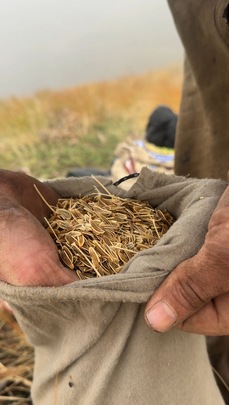
We, the undersigned, stand in support of recognizing the fundamental right of individuals to participate in the living systems that sustain life.
Across public lands in the United States, a contradiction exists:
Activities that extract, degrade, or commercially utilize land are permitted under regulated systems, while individuals who act independently to restore, regenerate, or contribute to ecological function can face criminal charges.
This contradiction reflects a deeper issue.. not of land management, but of disconnection.
At present, there is no clear path for individuals to directly contribute to the function of ecosystems through everyday participation. Conservation and restoration, as they currently exist, are primarily reactive—addressing damage after it occurs—rather than supporting continuous, place-based stewardship.
We believe this must change.
We define “wild tending” as the active, place-based participation in supporting the health, diversity, and function of living ecosystems.
This includes actions such as:
- Encouraging native food systems
- Supporting biodiversity through seed dispersal and plant cultivation
- Engaging with land in ways that increase ecological resilience over time
These actions are not acts of destruction. They are acts of participation in life itself.
We call for the following:
1. Legal Recognition of Wild Tending
Establish a lawful framework that distinguishes regenerative ecological actions from destructive land use.
2. Protection for Beneficial Ecological Activity
Ensure that individuals engaging in demonstrably beneficial land-based practices are not subject to criminal prosecution.
3. Integration of Traditional Ecological Knowledge (TEK)
Recognize and respect knowledge systems rooted in long-standing relationships with the land, including Indigenous practices that prioritize reciprocity and function.
4. Public Access to Participation
Affirm that public lands are not only for recreation or resource use, but also for responsible, informed participation in sustaining life systems.
Why is this important?
This is not a call for unregulated action.
It is a call for alignment between what is legal and what is life-giving.
We believe that contributing to the function of the natural world is not only a responsibility, but a right.
A system that permits degradation while prohibiting regeneration is out of balance.
We stand for a future where people are not separated from the living world but are recognized as participants within it.
How it will be delivered
By mail