
100 signatures reached
To: Wisconsin governor Tony Evers
A Long Way From Grown - He Needed Guidance, Not a Life Sentence
Hi everyone,
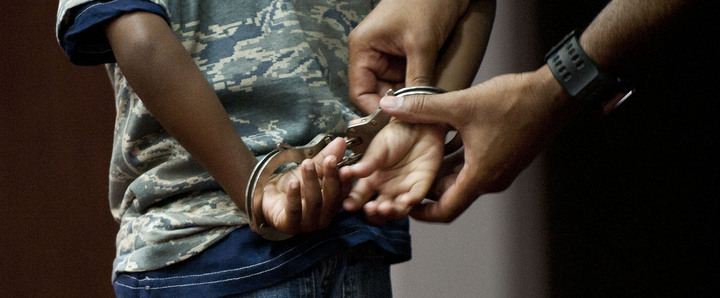
I'm writing to you today with a call to action, an invitation to join a powerful movement for the future of Wisconsin's youth. The Wisconsin Alliance for Youth Justice (WAYJ) is mobilizing, reaching out to our elected officials to advocate for a transformative piece of legislation: the youthful offender bill.
This isn't just about policy; it's about hope, about second chances, about believing in the potential that resides within every young person. This bill isn't about excusing wrongdoing; it's about protecting vulnerable youth from harsh, irreversible sentences, ensuring they have the opportunity to grow, learn, and contribute to our society. It's a belief that with time, support, and opportunity, no youth is beyond redemption.
I urge you to join WAYJ in this vital endeavor. Every voice, every message, amplifies the cause and strengthens our collective impact.
We cannot singlehandedly save Wisconsin's youth. It requires a united front, a village working together to build a brighter tomorrow. Let's answer this call, let's make our voices heard, and make a difference.
We want them to have self-worth... So we destroy their self-worth.
We want them to have self-worth... So we destroy their self-worth.
We want them to be responsible... So we take away all responsibilities.
We want them to be kind an loving people... So we subject them to hate an cruelty.
We want them to quit being the tough guy... So we put them where the tough guy is respected.
We want them to quit hanging around losers... So we put all the losers in the state under one roof.
We want them to be positive and constructive... So we degrade them and make them useless.
We want them to be trustworthy... So we put them where there is no trust.
We want them to be nonviolent... So we put them where there is violence all around them.
We want them to quit exploiting us... So we put them where they exploit each other.
We want them to think like normal people... So we put them where their fellow inmates think as they do... Reinforcing each other's losing beliefs and lifestyle.
We want them to take control of their lives, own their problems, and quit being parasites... So we make them totally dependent on us.
Winning at Losing (2004) Judge Dennis A. Challeen
Why is this important?
The purpose of my story is to show why society must rethink how it reacts to teenage crime, especially when the first response is driven by fear rather than belief in growth. My experience shows a difficult truth: a child who commits a terrible act is not permanently broken. The human spirit can learn, change, and rise from its lowest point. Rehabilitation is not theory—it is lived reality, and my life proves redemption is possible even when a person’s greatest mistake feels unforgivable.
People should join me in the campaign for reform because this is not only my story. Every person has needed a second chance and a path back into community. When we deny that possibility to children, we deny something essential about humanity. With community support, change becomes possible and humanity is restored.
My name is James D. Williams, one of many juvenile lifers in Wisconsin’s adult prison system. In 1997, two months after turning 17, I committed a terrible crime and took a life. I do not offer excuses. My actions came from a misguided code of loyalty, false ideas of strength, and fear. Growing up on Milwaukee’s North side, I was taught that keeping my word meant everything—that loyalty meant pushing feelings aside and never showing weakness. In the moment that changed my life forever, fear and confusion were stronger than reason. I believed I had no other choice.
After my arrest, the full weight of my actions crushed me. I hid in my cell, overcome with shame and depression. No one cared about my apologies, not the State, not my victim’s family, and even my own family was shocked. I believed honesty and accountability might bring some relief, but nothing changed. So I buried my emotions and pretended to be strong.
At sentencing, I begged the judge to see me as more than the crime—to see a young person capable of change. Instead, I was labeled a “monster” without hope for redemption. At 17, I was sentenced to life with a parole date 101 years away. The judge said my life was over, and I would never be anything more than my worst act.
Entering prison, I was legally an adult but emotionally a child. I was isolated, terrified, and overwhelmed by guilt. Panic attacks, depression, and conflict became part of my daily existence. Yet in the middle of all that, I managed to earn my HSED and a vocational certificate. One night, I asked myself what I needed to survive a life in prison, and the answer became psychology. I read books on persuasion and self-help, not to heal, but to control my surroundings. I distanced myself from reality for years, convinced I was unlovable and deserved only pain.
My turning point came when I finally entered a true rehabilitation program in my 30s. A program called Challenges and Possibilities introduced me to restorative justice. I learned about the ripple effects of crime—how one violent act spreads pain into families and communities. That understanding forced me to confront the full impact of my actions. I apologized to my family and listened to their pain, facing the truth rather than hiding from it.
Even then, shame controlled me. I tried to be the person I believed I should be, and others looked to me for guidance. Helping gave me purpose, but I was still drowning in guilt, believing that endless punishment would somehow create peace. Nothing worked until a short stay in segregation forced me to face myself honestly. There, I read House of Healing, and for the first time, I understood that seeking forgiveness included forgiving myself. It did not erase my crime, but it opened the door to real healing.
From that point on, I worked to become the person I wished I had been. I continued my education, reached out to my victim’s family through the Office of Victim Services, and prepared for a future I never expected to have. When the U.S. Supreme Court ruled that juveniles could not be given life without parole, hope returned, even though I feared release because prison was the only world I knew.
I filed motions, pursued vocational training, and earned degrees. The legal system offered moments of hope, then disappointment. Reform movements rose and faded. Bills stalled. Promises from officials collapsed. Each time, I had to face the possibility that I might die behind these walls, even after decades of growth. But I never stopped learning, mentoring, and preparing to contribute to society.
Programs like the RYTE Program showed me the value of my experience. Speaking to youth about choices and consequences gave meaning to my life. I earned degrees, including a bachelor’s degree with honors, and continued building skills while embracing accountability and service.
My story isn’t finished. I continue to study, mentor, create, and work to improve myself. I don’t know how it will end, but I know why it matters: a 17-year-old can commit a terrible act without fully understanding the scale of what he is doing. A child’s brain and worldview are incomplete. Fear, loyalty, and identity overpower consequence and clarity. But that child does not stay frozen in time. He grows. He learns. He matures into someone capable of empathy, purpose, and contribution.
Rehabilitation is not about perfection—it is about persistence. It proves that even after the worst mistake, a person can build a meaningful life. My sentencing judge could not see that possibility. But decades later, I stand as proof he was wrong.
This campaign is bigger than me. It is about the belief that no young person should be defined forever by their darkest moment. It is about restoring the possibility of redemption. Children deserve a real chance to become the adults they are capable of being. And when we offer that chance, we do more than help individuals—we preserve the values we claim to hold as a society.
My story continues, and the work of change continues with it.