.png)
50 signatures reached
To: House Committee on Oversight
Call for Accountability Under the Trumpstein Files Transparency Act
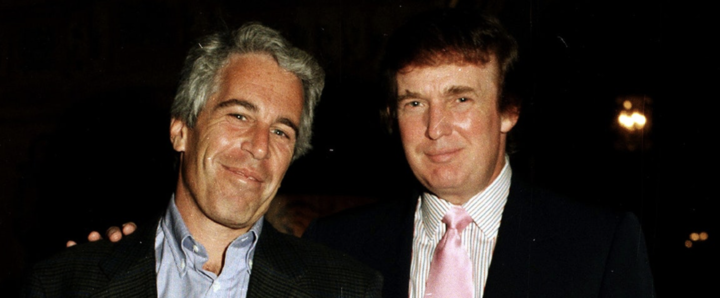
I am a concerned constituent writing to request that the Committee investigate the conduct and public statements of certain House Republicans regarding the Epstein Files Transparency Act and the Department of Justice’s handling of Jeffrey Epstein–related documents.
Congress passed the Epstein Files Transparency Act to require the release of all unclassified federal records related to Jeffrey Epstein and Ghislaine Maxwell, subject to narrow exceptions for victim privacy, ongoing investigations, and national security. President Donald Trump signed this bipartisan legislation into law in November 2025. The clear purpose of the Act was to ensure transparency, accountability, and justice for Epstein’s many victims.
Since then, multiple reports have documented both:
- That the Department of Justice’s implementation of the law has been incomplete and heavily constrained (for example, limiting review of millions of pages of files to a handful of computers for Members of Congress, making meaningful oversight nearly impossible), and
- That partisan messaging around the law has shifted from demanding full transparency to justifying limited releases and downplaying the impact on victims and ongoing investigations.
On February 24, 2026, new reporting revealed that the Department of Justice appears to have withheld and even removed dozens of pages of FBI interview reports and notes from the public Epstein files database, specifically in a case involving a survivor who accused President Donald Trump of s*xůålly assaulting her when she was a minor. According to these reports, an index prepared in the Ghislaine Maxwell prosecution shows at least four FBI interviews and related notes with this victim, totaling more than fifty pages, while only a single interview report is present in the public database, leaving a glaring gap in the record. House Oversight Democrats who reviewed the unredacted files state that the DOJ appears to have illegally withheld these interviews, and that materials mentioning Trump were removed from the public database, raising serious concerns that a victim’s case and related evidence were effectively shut down or buried by DOJ decisions in direct tension with the Epstein Files Transparency Act (see, for example, NPR, “DOJ removed, withheld Epstein files related to accusations against Trump,” Feb. 24, 2026; ABC News, “DOJ appears to have withheld some Epstein documents containing allegations against Trump,” Feb. 24, 2026).
These facts make it impossible to credibly claim that DOJ has fully complied with the Epstein Files Transparency Act or that there is “nothing more to see,” yet some House Republicans continue to make such assertions publicly.
I am particularly concerned that some House Republicans are doing the following:
- Publicly invoke “transparency” while simultaneously minimizing or ignoring evidence that DOJ is withholding or structuring access to records in ways that frustrate the Act’s intent.
- Cite incomplete file releases or cherry‑picked documents as proof that “nothing more is there,” while victims and bipartisan members have stated there are more than a thousand victims and millions of pages of material that remain difficult to access or fully review.
- Dismiss or attack inquiries into DOJ’s handling of the files and of individual victims’ cases as “witch hunts” or purely partisan, despite the bipartisan origins of the Epstein Files Transparency Act and bipartisan concern about DOJ compliance.
When Members of Congress selectively present or discard facts about the statute that they themselves passed, or about the real experience of victims whose cases may have been shut down, they undermine the Committee’s core mission of good‑faith oversight and erode public trust.
I respectfully request that the Committee:
- Hold a public hearing focused specifically on DOJ’s handling of victim cases that were closed or blocked in the Epstein matter, including the case reported today.
- Require DOJ to provide a full, public explanation of why that victim’s case was shut down and how that decision is consistent with the Epstein Files Transparency Act.
- Request all internal DOJ guidance, memos, and decision documents related to application of the Act’s exemptions (ongoing investigations, victim privacy, national security) and how those were used in this victim’s case.
- Review public statements by House Members about the Act and DOJ’s compliance and compare them to the actual statutory requirements and factual record, and, where appropriate, issue corrective findings or refer egregious misrepresentations to the House Ethics Committee.
I also ask that Members center survivors and their safety in this process. Victims have repeatedly asked for genuine transparency and accountability, not political point‑scoring. Congress should ensure that survivors and their counsel have safe, meaningful opportunities to testify about cases that were denied, delayed, or shut down.
I am submitting this complaint in good faith and under my rights as a citizen to petition my government for redress of grievances. I request a written response outlining what steps, if any, the Committee intends to take in light of this request.
Why is this important?
This petition is important because the Epstein Files Transparency Act was passed to shed light on one of the most powerful criminal networks in recent history and to ensure real accountability for the victims of Jeffrey Epstein and his associates. When the Department of Justice appears to withhold or alter records—especially those involving serious allegations—it undermines both the rule of law and the public’s faith that justice applies equally to everyone, no matter how powerful.
Congress promised transparency and bipartisan oversight, not selective disclosure or partisan spin. If Members of Congress misrepresent what the law requires or look the other way when the DOJ withholds key evidence, that betrays the survivors who have already endured years of silence and dismissal.
Demanding a full and fair investigation isn’t about politics—it’s about restoring integrity to our institutions, protecting victims’ rights, and reaffirming that no one is above scrutiny when justice and truth are at stake.
How it will be delivered
Email/report/deliver to House Oversight Committee