
Search result for "2026年560293上市交易时间".
-
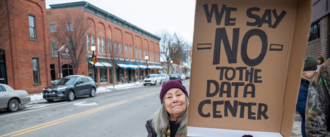 Pass a Nationwide AI Data Center MoratoriumAI data centers are rapidly popping up across the country—putting a drain on our communities, environment, and local economies. Everyday Americans are taking on Big Tech one by one in cities and towns, but they're up against big money and corrupt interests. We need a federal solution to rein in corporations, ensure proper oversight, and protect people and our natural resources. We demand Congress pass the Artificial Intelligence Data Center Moratorium Act NOW!1,554 of 2,000 SignaturesCreated by MoveOn
 -
.png) Unilever: Stop silencing Ben & Jerry’s ice cream NOW!In September, Jerry made one of the hardest and most painful decisions he’s ever made: he stepped down from the company that we started 47 years ago. Why? Because Unilever, the company that acquired Ben & Jerry’s in 2000, now called The Magnum Ice Cream Company, has been silencing Ben & Jerry’s when the brand has tried to speak out about social injustices and progressive values. It’s unacceptable. It was always about more than just ice cream: Love, equity, justice—they’re part of who we are, and they’ve always been the true foundation of Ben & Jerry’s. We cannot let those values be simply discarded under political pressure from the Trump administration. Will you join us and sign my petition to demand that Unilever stop silencing Ben & Jerry’s ice cream NOW and be entered in a raffle to win a free pint of my sorbet?71,584 of 75,000 SignaturesCreated by Ben Cohen, co-founder of Ben & Jerry's
Unilever: Stop silencing Ben & Jerry’s ice cream NOW!In September, Jerry made one of the hardest and most painful decisions he’s ever made: he stepped down from the company that we started 47 years ago. Why? Because Unilever, the company that acquired Ben & Jerry’s in 2000, now called The Magnum Ice Cream Company, has been silencing Ben & Jerry’s when the brand has tried to speak out about social injustices and progressive values. It’s unacceptable. It was always about more than just ice cream: Love, equity, justice—they’re part of who we are, and they’ve always been the true foundation of Ben & Jerry’s. We cannot let those values be simply discarded under political pressure from the Trump administration. Will you join us and sign my petition to demand that Unilever stop silencing Ben & Jerry’s ice cream NOW and be entered in a raffle to win a free pint of my sorbet?71,584 of 75,000 SignaturesCreated by Ben Cohen, co-founder of Ben & Jerry's
-
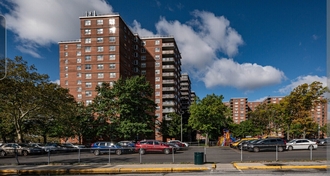 Keep Rochdale Village Affordable!!!We are writing as concerned shareholders of a Mitchell-Lama cooperative at Rochdale Village in Jamaica, Queens to urge you to take immediate action to prevent an unfair financial burden from being placed on Rochdale's residents due to a proposed Carrying charge increase. The lowest increase being 22.3% starting as soon as April 2025, and then another 4.5% in 2026. The highest increase is 34.7% starting April 2025, and then another 5% in 2026. Shareholders are now being forced to shoulder a debt caused by the mismanagement of funds by Summit Management Company, and this increase is not only unjust but also unsustainable for many of us. As you are aware, Mitchell-Lama housing was established to provide affordable housing to working-class New Yorkers, but the ongoing mismanagement and financial instability threaten that very mission. The responsibility for resolving these financial missteps should not fall on the residents, many of whom are already struggling due to the economic impacts of COVID-19. Shareholders who fell behind on their carrying charges due to the pandemic should not be penalized further by rent hikes that they simply cannot afford. We urge you to intervene and work toward a solution that does not place the financial burden on the shareholders. NYC officials must take responsibility and provide relief for those in arrears due to COVID-19 while holding accountable those responsible for financial mismanagement. Additionally, increased oversight of management companies handling Rochdale Village is necessary to prevent future financial mismanagement. We are asking for your leadership in ensuring that Rochdale Village remains an affordable housing option for those who need it most. We know that as the highest elected public officials in NY State that you have used your power to pass legislation to provide $80 million in NY State funding to Mitchell-Lama housing cooperatives in their time of need, in New York's 2024-25 Fiscal Year Budget. (https://nyassembly.gov/Press/?sec=story&story=110102) But we also know that since this funding was passed as part of the New York State budget on April 20, 2024, to our knowledge, not one dollar of aid has been provided to any of NY's Mitchell-Lama Cooperatives that this funding was intended to help. Even Coop City which was publicly promised $51 million in direct state aid has not yet received this aid (https://assembly.state.ny.us/Press/?sec=story&story=110377). We are appealing to you as N.Y. State leaders to take whatever actions are necessary to make sure that these taxpayer funds actually get provided to your largest Mitchell-Lama cooperatives to prevent them from solving their financial burdens on the backs of the very working class New Yorkers that built and supported these communities over many decades. These funds are URGENTLY NEEDED and we are the very people this program was created to help in the first place. Please keep your promises to fight for truly affordable housing in NYC and throughout our great state. Below you will find an explanation of what we know about the financial crisis that our Cooperative is currently facing, which will further explain the need for urgent action by NY State:1,563 of 2,000 SignaturesCreated by John Ferretti
 -
 Call for Accountability Under the Trumpstein Files Transparency ActI am a concerned constituent writing to request that the Committee investigate the conduct and public statements of certain House Republicans regarding the Epstein Files Transparency Act and the Department of Justice’s handling of Jeffrey Epstein–related documents. Congress passed the Epstein Files Transparency Act to require the release of all unclassified federal records related to Jeffrey Epstein and Ghislaine Maxwell, subject to narrow exceptions for victim privacy, ongoing investigations, and national security. President Donald Trump signed this bipartisan legislation into law in November 2025. The clear purpose of the Act was to ensure transparency, accountability, and justice for Epstein’s many victims. Since then, multiple reports have documented both: • That the Department of Justice’s implementation of the law has been incomplete and heavily constrained (for example, limiting review of millions of pages of files to a handful of computers for Members of Congress, making meaningful oversight nearly impossible), and • That partisan messaging around the law has shifted from demanding full transparency to justifying limited releases and downplaying the impact on victims and ongoing investigations. On February 24, 2026, new reporting revealed that the Department of Justice appears to have withheld and even removed dozens of pages of FBI interview reports and notes from the public Epstein files database, specifically in a case involving a survivor who accused President Donald Trump of s*xůålly assaulting her when she was a minor. According to these reports, an index prepared in the Ghislaine Maxwell prosecution shows at least four FBI interviews and related notes with this victim, totaling more than fifty pages, while only a single interview report is present in the public database, leaving a glaring gap in the record. House Oversight Democrats who reviewed the unredacted files state that the DOJ appears to have illegally withheld these interviews, and that materials mentioning Trump were removed from the public database, raising serious concerns that a victim’s case and related evidence were effectively shut down or buried by DOJ decisions in direct tension with the Epstein Files Transparency Act (see, for example, NPR, “DOJ removed, withheld Epstein files related to accusations against Trump,” Feb. 24, 2026; ABC News, “DOJ appears to have withheld some Epstein documents containing allegations against Trump,” Feb. 24, 2026). These facts make it impossible to credibly claim that DOJ has fully complied with the Epstein Files Transparency Act or that there is “nothing more to see,” yet some House Republicans continue to make such assertions publicly. I am particularly concerned that some House Republicans are doing the following: • Publicly invoke “transparency” while simultaneously minimizing or ignoring evidence that DOJ is withholding or structuring access to records in ways that frustrate the Act’s intent. • Cite incomplete file releases or cherry‑picked documents as proof that “nothing more is there,” while victims and bipartisan members have stated there are more than a thousand victims and millions of pages of material that remain difficult to access or fully review. • Dismiss or attack inquiries into DOJ’s handling of the files and of individual victims’ cases as “witch hunts” or purely partisan, despite the bipartisan origins of the Epstein Files Transparency Act and bipartisan concern about DOJ compliance. When Members of Congress selectively present or discard facts about the statute that they themselves passed, or about the real experience of victims whose cases may have been shut down, they undermine the Committee’s core mission of good‑faith oversight and erode public trust. I respectfully request that the Committee: 1. Hold a public hearing focused specifically on DOJ’s handling of victim cases that were closed or blocked in the Epstein matter, including the case reported today. 2. Require DOJ to provide a full, public explanation of why that victim’s case was shut down and how that decision is consistent with the Epstein Files Transparency Act. 3. Request all internal DOJ guidance, memos, and decision documents related to application of the Act’s exemptions (ongoing investigations, victim privacy, national security) and how those were used in this victim’s case. 4. Review public statements by House Members about the Act and DOJ’s compliance and compare them to the actual statutory requirements and factual record, and, where appropriate, issue corrective findings or refer egregious misrepresentations to the House Ethics Committee. I also ask that Members center survivors and their safety in this process. Victims have repeatedly asked for genuine transparency and accountability, not political point‑scoring. Congress should ensure that survivors and their counsel have safe, meaningful opportunities to testify about cases that were denied, delayed, or shut down. I am submitting this complaint in good faith and under my rights as a citizen to petition my government for redress of grievances. I request a written response outlining what steps, if any, the Committee intends to take in light of this request.47 of 100 SignaturesCreated by Citizens Against Tyranny
-
 SB 1181 – Youth Mental Health and AI UseArtificial intelligence is rapidly becoming a source of companionship for young people without proper safeguards, it can harm their mental health. According to a recent study published in JAMA Network Open, approximately one in eight American teenagers and young adults are using AI chatbots for mental health guidance. (One in Eight Adolescents and Young Adults Use AI Chatbots for Mental Health Advice, 2025) As constituents we ask that California's Legislators pass legislature that: 1. Set Age & Content Limits - Require a minimum age of 13 to use AI platforms - Restrict AI from engaging in mental health counseling with minors - Enforce strong content protections for users under 18 2. Strengthen Privacy Protections - Limit collection and storage of photos and personal media - Protect young users’ identities and sensitive data12 of 100 SignaturesCreated by Camila Garnica
 -
Pledge to permanently boycott The City Creek MallCity Creek was created with the intention of destabilizing the fragile economy of the Salt Lake City downtown area. It's a place for discrimination, a place for a selected few, a place build in an area where economy was already established; it didn't need to be improved.67 of 100 SignaturesCreated by Jonathan Drapper
-
Petition to the State of Nevada: Adopt “Person in Custody” LanguagePetition to the State of Nevada: Adopt “Person in Custody” Language in Law, Policy, and Public Communication DEADLINE: JUNE 1, 2026 To the Nevada Legislature, the Nevada Department of Corrections, and state policymakers: We, the undersigned residents and advocates, call on the State of Nevada to adopt person-first language when referring to individuals held in prisons, jails, and other detention facilities. Specifically, we urge Nevada to replace terms such as “inmate,” “offender,” and “prisoner” with the more accurate and humane phrase “person in custody.” Language matters. The words used in law and policy shape how institutions treat people and how the public understands them. Labels such as “inmate” and “offender” reduce human beings to a status defined solely by incarceration. In contrast, “person in custody” acknowledges that individuals held by the state remain people first — people with families, histories, health needs, and inherent dignity. Across the country, jurisdictions and institutions are recognizing the importance of person-first language. This shift reflects a growing understanding that people do not cease to be human when they enter a correctional facility, and that humane language is an essential step toward humane policy. Adopting “person in custody” language would: - Affirm human dignity. Every individual in state custody retains their humanity and their constitutional rights. - Promote more humane policy and practice. Person-first language encourages institutions to focus on care, accountability, and rehabilitation rather than dehumanization. - Align Nevada with modern standards. Many courts, policymakers, journalists, and advocacy organizations have already moved toward person-first terminology. - Recognize the lived reality of incarceration. Families, attorneys, and advocates see every day that people in custody are more than the labels placed upon them.107 of 200 SignaturesCreated by Courtney Crosby
-
Fight back and ban construction of AI data centersWe urge you to support a moratorium on the construction of AI data centers.514 of 600 SignaturesCreated by Demand Progress
-
 Newberry County Council: Reject the Project Altair Data CenterWe, the undersigned residents of Newberry County, call on the Newberry County Council to reject Ordinance 03-01-2026 and decline to option the remaining acreage of Mid-Carolina Commerce Park II to the Project Altair data center developer. Newberry County is a place defined by its land, its water, and the quiet rhythm of small-town life. A data center on this site puts all three at risk — for the benefit of an out-of-state developer and a corporate tenant who will not live here, send their children to our schools, or drink from our wells. The documented harms are not speculation: ⚡ Higher electric bills for every household. Bloomberg's analysis of 25,000 grid nodes found wholesale electricity prices have risen up to 267% over five years in areas near significant data center activity. The U.S. Energy Information Administration projects residential electricity prices could rise up to 40% by 2030. Without a separate large-load rate class, every Newberry Electric Cooperative member would help pay for infrastructure built to serve a single industrial customer. 💧 Strain on our water supply. A medium-sized data center uses roughly 110 million gallons of water per year. Larger facilities consume up to 5 million gallons per day — the equivalent of a town of 30,000 to 50,000 people. Even "closed-loop" cooling requires continuous makeup water. 🔊 Round-the-clock industrial noise. Data center cooling systems and backup generators produce continuous low-frequency noise that travels farther and is harder to block than ordinary noise. Studies show noise above 65 decibels raises stress, blood pressure, and disrupts sleep. Residential neighborhoods and the Mid-Carolina Country Club would be in the affected zone. 🏥 Real public health costs. A 2025 modeling study projects that U.S. data centers in 2030 could contribute to roughly 1,300 premature deaths and 600,000 asthma symptom cases per year — driven by emissions from backup generators and the gas plants brought online to serve them. 👷 Few permanent jobs. Data centers create very few ongoing jobs relative to their footprint and resource demand — typically 30 to 50 once operational. The recently withdrawn $3 billion Spartanburg "Project Spero" data center would have created just 50 jobs. Our way of life is not for sale. We are not opposed to economic growth. We are opposed to growth that takes more from our community than it gives — that raises our utility bills, drains our aquifers, fills our nights with industrial hum, and leaves us with the cleanup when the technology cycle moves on. We call on Newberry County Council to: 1. Vote NO on the third reading of Ordinance 03-01-2026. 2. Decline any Fee in Lieu of Tax (FILOT), Special Source Revenue Credit, or Multi-County Industrial Park designation that would subsidize this project at taxpayer expense. 3. Publicly release the Santee Cooper grid study and Newberry Electric Cooperative load and rate-impact analyses before any further action. 4. Preserve Mid-Carolina Commerce Park II for industrial uses that create real, lasting jobs in proportion to the resources they consume. Newberry County deserves an economic future built on more than one secretive deal with one corporate tenant. We are watching. We are organized. And we are voting.544 of 600 SignaturesCreated by Tracy Clifford
 -
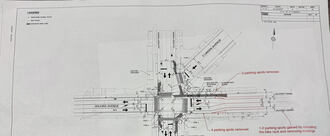 Say NO to Proposed Traffic Changes on Beechwood BLVD, Wilkins Ave, and S Linden AveAt a public meeting that will be held on December 8, 2025, at Linden School at 5:30 P.M., Pittsburgh’s Department of Mobility and Infrastructure (DOMI) will present its initial plan to change traffic patterns, make a portion of S Linden Ave one-way, restrict turns, remove parking spaces, and add pedestrian crosswalks, and bicycle infrastructure in the area of S Linden Ave, Wilkins Ave, and Beechwood Boulevard, in Squirrel Hill / Point Breeze. The plan has been designed as a “Quick-Build” and is set to be implemented in 2026. Read the City’s proposal here. Challenges with the current plans include: 1. Fails to solve some of the most dangerous existing conditions. 2. Further complicates already complicated intersections, increasing the likelihood for additional danger to all users. 3. Prioritizes commuter traffic at the expense of local residents’ ability to navigate the neighborhood safely and conveniently. 4. Removes street parking from the front of several homes and many businesses, negatively impacting safety and convenience for those residents, their guests, deliveries, and visitors to the businesses. 5. Fails to provide safer pedestrian crossings to the existing PRT bus stops on Wilkins. 6. Increases travel times for popular local routes. 7. Re-routes traffic (school busses, residents’ vehicles, delivery vehicles, business patrons, etc.) to smaller side streets (Hastings Street, Reynolds Street, Gettysburg Street, Fennimore Street, Edgerton Ave, Glen Arden Drive, Kingston Way, Elysian Street, S Dallas Ave, Conover Road, Sinnet Way, Selwyn Street, Lacy Way), that were not designed to handle this level of traffic. 8. Does not take into consideration and does not include plans to reduce speeding toward and through the light at S Linden and the five-way intersection.413 of 500 SignaturesCreated by Jeremy Goldman